Macao, October 21 — The Global Shiology Index (GSI) Report 2026 and its companion thematic report, GSI Report — Issues and Governance in Portuguese and Spanish-Speaking Countries and Regions, were officially launched at the 31st Macao International Trade and Investment Fair. Themed "A Governance Framework Oriented to the “Five Eater Needs” of 8 Billion People: From “Food Security” to “Food–Body Coupling," the reports quantitatively assess the food-related status of 177 countries. They present differentiated governance solutions and introduce the “Global Food Sustainability Action Framework (2050)” draft, providing new evaluation tools and policy references for global food system governance in the post-2030 era.
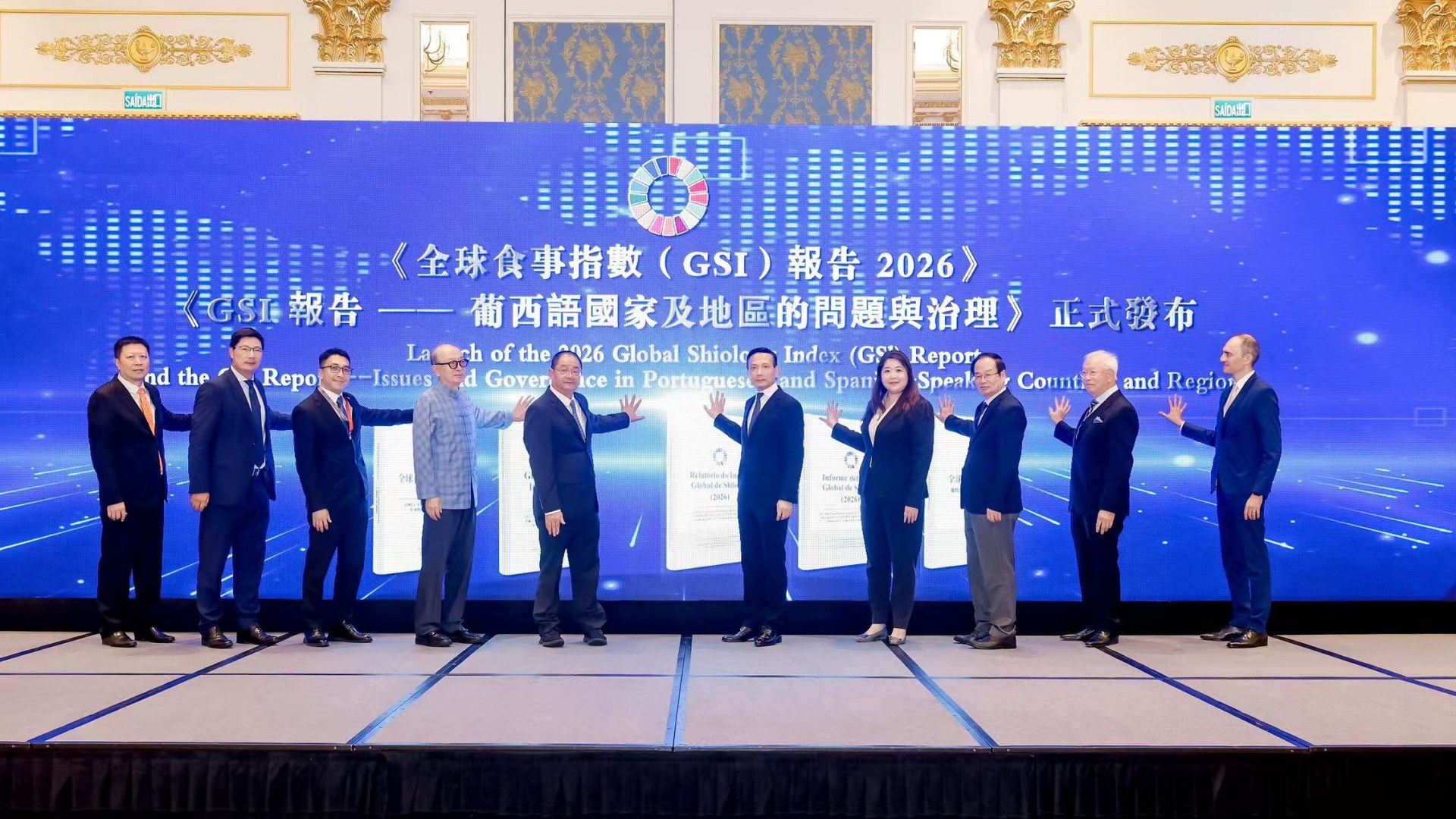
The official launch ceremony of the GSI Report 2026 in Macao
At the event, Prof. Wei Ge, Vice Rector of the University of Macau, read the foreword written by Ban Ki-moon, the 8th Secretary-General of the United Nations: "The problems within food systems are complex. We face older issues such as insufficient food supply, along with newer ones like like polluted soil and water. To tackle these challenges, we need a comprehensive knowledge framework that covers the entire food system. Shiology offers such a framework—integrating 'Eaters, food, and food order' —and provides a full-chain approach to understanding food system issues."
Mr. Zhu Juwang, Director of the Division for Public Institutions and Digital Government and Acting Director of the Division for Sustainable Development at the United Nations Department of Economic and Social Affairs (UN DESA), stated in his address: "We are at a critical juncture. With only a few years remaining until 2030, the world continues to face multiple challenges, including conflict, climate change, poverty, inequality, and food insecurity. Food-related issues go far beyond agriculture. They are closely connected to human health, dignity, prosperity, and the future of our planet. Achieving the Sustainable Development Goals requires stronger international cooperation and more integrated approaches.The findings of this report can contribute evidence and policy tools to discussion on sustainable development beyond 2030 and the development of long-term strategic frameworks.
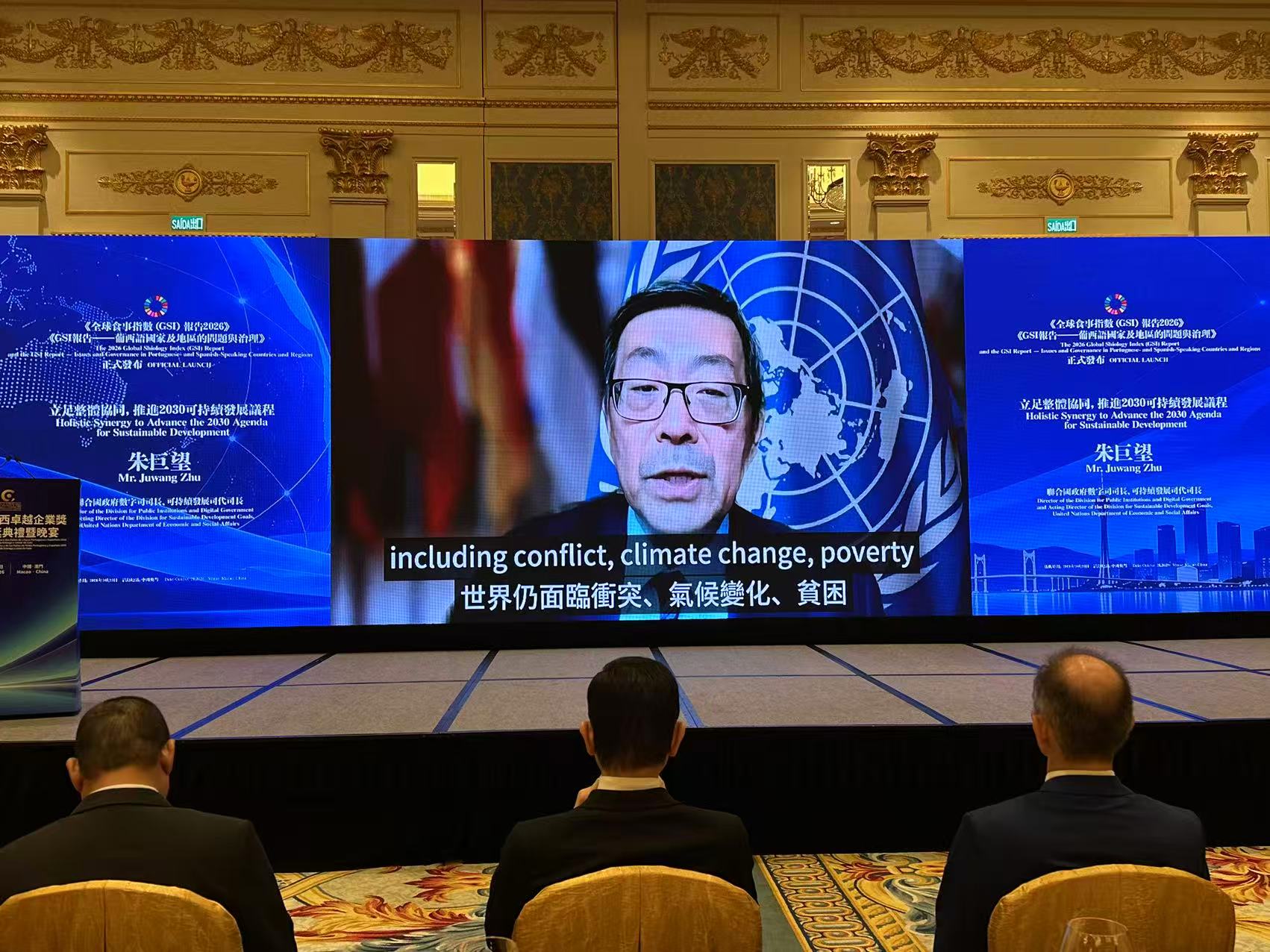
Video Speech by Zhu Juwang
Tom Heilandt, Former Secretary of the Codex Alimentarius Commission (FAO/WHO), noted in his address that Shiology is grounded in the needs of the eater and provides a new framework to address the dual burden of global malnutrition. The Global Shiology Index facilitates horizontal comparison and mutual learning among countries. He expressed the expectation to leverage Macao's geographical advantages to expand collaboration with Portuguese and Spanish-speaking countries, bringing international goals down to the daily dietary lives of ordinary people.
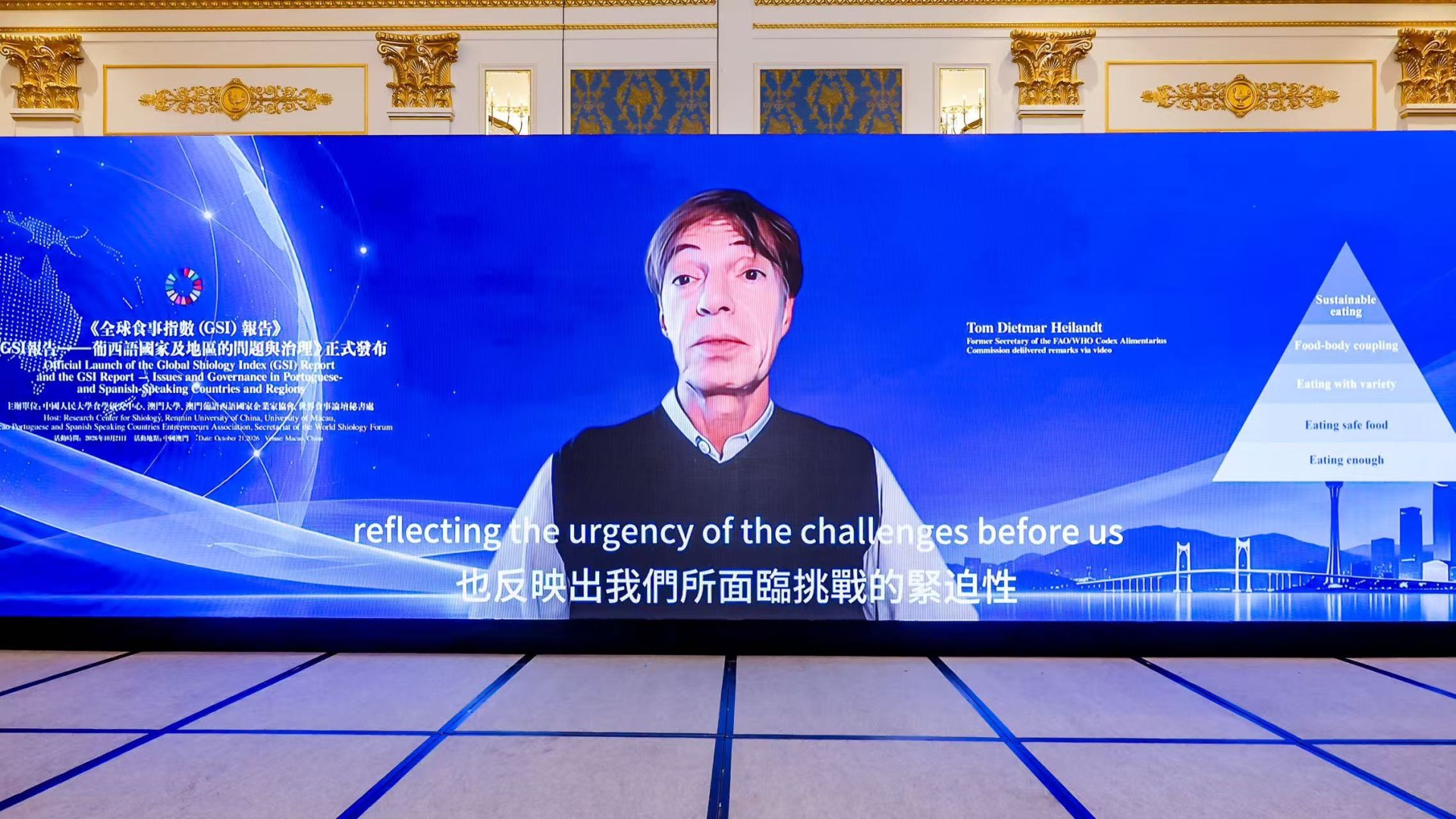
Video Speech by Tom Heilandt
Prof. Liu Guangwei, Director of the Food Studies Research Center at Renmin University of China, pointed out that the report is theoretically grounded in Shiology. Based on the five practical needs—"eating enough, eating safely, eating with variety, food-body coupling, and sustainable eating"—it integrates food production, food utilization (i.e., eating for health), and Shiance order into a unified analytical framework, completing a comprehensive scoring for 177 countries. The report also conducts comparative analyses across six dimensions: continent, latitude, geographical type, income, population size, and primary language. It divides the assessed countries into 16 groups, establishing a classified governance mechanism with corresponding response plans to facilitate food system governance tailored to each country's realities.
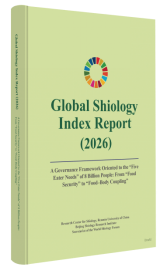
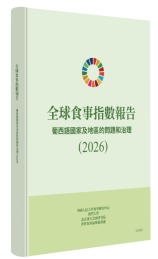
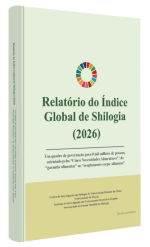
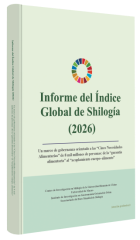
Key Highlights of the GSI Report 2026
Highlight 1: Pioneering the Global Shiology Index (GSI) centered on the "Five Eater Needs," establishing a unified evaluation system.
Leveraging the "Five Eater Needs" pyramid model, the report establishes a classification system for Shiance issues, integrating previously fragmented real-world issues related to sufficiency, safety, variety, coupling, and sustainability into a unified framework. It selects 40 cross-nationally comparable indicators to quantitatively observe 15 categories of Shiance issues, forming a complete chain of "Needs—Issues—Indicators—Index." Currently, there is a global lack of quantitative assessment tools based on an eater-centric perspective covering the entire chain; the GSI represents a significant exploration in this regard.
Highlight 2: Covering assessments for 177 countries, driving global Shiance evaluation from scattered observations to systematic quantification.
Based on a unified data processing and scoring system, the report completes a comprehensive assessment of 177 countries. Among them, 169 countries received formal comprehensive rankings, while 8 countries were included as reference scores due to missing indicators, ensuring the objectivity and rigor of the evaluation. The report simultaneously produces five sub-domain lists and conducts comparative analyses across six dimensions. The overall scores intuitively reflect the level of Shiance development, while sub-dimensional analyses reveal structural shortcomings within a country's food system.
Highlight 3: Introducing 16 classified governance solutions, advocating differentiated strategies based on development stages.
Using agricultural natural resource endowment and life expectancy at birth as two core dimensions, the report constructs a resource-longevity Shiance quadrant chart, positioning 177 countries with complete data into 16 groups and establishing a classified governance mechanism. The solutions fully consider each country's resource endowment, development stage, and practical implementation conditions, providing actionable references for countries worldwide to tailor Shiance governance to local conditions.
Highlight 4: Identifying two longevity diet blueprints to provide practical references for global healthy eating.
The report identifies two typical "Food-Body Coupling" regions with average life expectancies exceeding 83 years. The first is the Mediterranean Diet Circle, covering three observed countries—Spain, Italy, and Cyprus—with a total population of 109 million and an average life expectancy of 83.7 years. The second is the East Asian Diet Circle, comprising three countries and five regions (Japan, South Korea, and China's Hong Kong, Shanghai, and Macao), with a total population of 209 million and an average life expectancy of 84.3 years. These two blueprints provide practical references for countries worldwide to optimize national dietary health.
Highlight 5: Driving the transformation of global Shiance governance with the 2050 Action Framework, strengthening the policy loop from evaluation to action.
To align with the post-2030 global sustainable development agenda, the report releases the Global Food Sustainability Action Framework (2050) draft. Building upon the diagnostic results of the GSI and grounded in the Five Eater Needs system, the framework clarifies medium- and long-term Shiance governance goals, transformation pathways, and multi-stakeholder collaboration mechanisms. It translates index evaluation results into policy action guidelines, providing a programmatic reference for countries and international organizations to promote long-term food system transformation.
Highlight 6: Launching a thematic regional report, forming a complementary research structure of global and regional reports.
The simultaneously launched thematic report, GSI Report—Issues and Governance in Portuguese and Spanish-Speaking Countries and Regions, completes an overall assessment, sub-domain analysis, and country-specific case studies for 28 Portuguese and Spanish-speaking countries. Incorporating data from Macao and Puerto Rico, the sample size expands to 30, fully mapping the region's Shiance development landscape. Placing all samples under the global GSI evaluation system, the thematic report compares differences between Portuguese-speaking and Spanish-speaking country groups, across regions, and within individual countries, providing solid research support for cross-border exchange and cooperation in the Portuguese and Spanish-speaking world.
The launch event was supported by institutions including the University of Macau and the Macao Association of Entrepreneurs for Portuguese-Speaking Countries. It fully leveraged Macao's bridging role connecting China with Portuguese and Spanish-speaking countries to bring cutting-edge research on Shiance governance to the international stage, promoting the translation of research into practical international cooperation. Next, the project team will continue to iterate the GSI, conduct country case studies, and deepen academic exchanges with Portuguese and Spanish-speaking countries.
Watch Mr. Zhu Juwang's full video address here: https://www.shiology.world/zh/news/2026-2/
Watch Tom Heilandt's full video address here: https://www.shiology.world/zh/news/2026-2/